In this guide
- Where to look on a Yu-Gi-Oh! card
- Yu-Gi-Oh! rarity chart: name, art and tell-tale signs
- Secret, Starlight or Quarter Century? Telling the shiny ones apart
- 1st Edition, Unlimited or Limited Edition?
- The Eye of Anubis hologram: what it tells you
- Rare isn't the same as valuable: price the exact print
- Quick fake check
Check two things: the card name and the artwork. A plain black or white name on flat art is a Common. A silver name on flat art is a Rare. A plain name on shiny art is a Super Rare, a gold name on shiny art an Ultra Rare, and a rainbow name on sparkly art a Secret Rare or higher. Then read the set code under the art, such as LOB-EN001. It identifies the exact print, which is what sets the price, but it does not spell out the rarity.
Where to look on a Yu-Gi-Oh! card
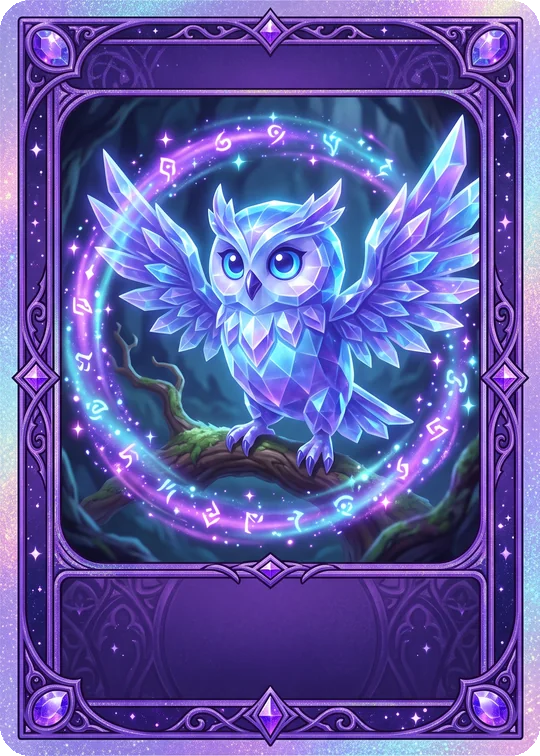
Everything you need is on the front of the card. Five spots matter, and the figure shows where each one sits.
 1
2
LOB-EN001
3
1st Edition
4
5
1
2
LOB-EN001
3
1st Edition
4
5
- Card name. Its foil is the first rarity clue: none, silver, gold, rainbow or champagne-gold.
- Artwork. Flat print or holofoil, and if it's foil, which pattern.
- Set code. Under the right side of the art on most cards. Pendulum Monsters print it at the bottom left, in line with ATK and DEF.
- Edition text. "1st Edition" or "LIMITED EDITION"; no text means Unlimited. On newer cards it sits at the bottom, right of the password. On older cards it sits just under the left edge of the art.
- Hologram. The small square in the bottom-right corner. Gold or silver, depending on the edition.
Reading the set code
Take LOB-EN001. LOB is the set (Legend of Blue Eyes White Dragon), EN is the region and language (worldwide English), and 001 is the card's position in the set. The very first English prints used shorter forms: LOB-001 in North America and LOB-E001 in Europe.
What the code does not tell you is the rarity. Konami's own card database lists Blue-Eyes White Dragon RA05-EN085 twice, once as Ultra Rare and once as Starlight Rare. It lists BLMM-EN001 as both Secret Rare and Starlight Rare. Ash Blossom & Joyous Spring goes further: the 25th Anniversary Rarity Collection printed RA01-EN008 in seven rarities, from Super Rare to Quarter Century Secret Rare. One code can cover different foils at different prices. To read the rarity from the card in your hand, look at the foil.
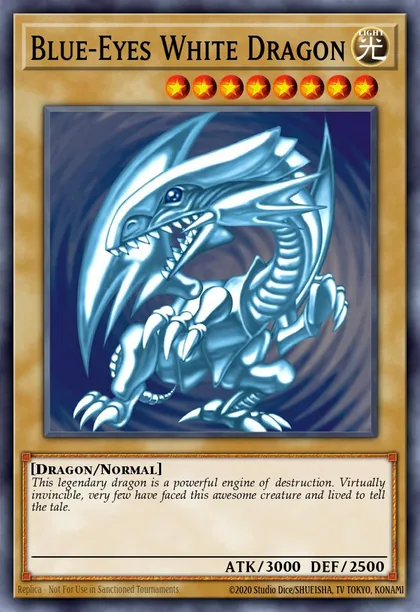 Blue-Eyes White Dragon77 printings in Konami's database
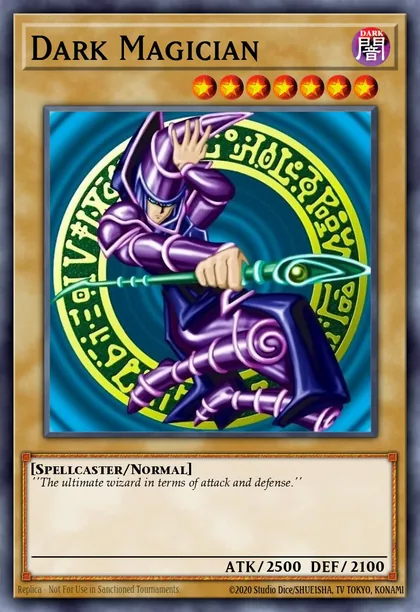 Dark MagicianMore than 60 English printings
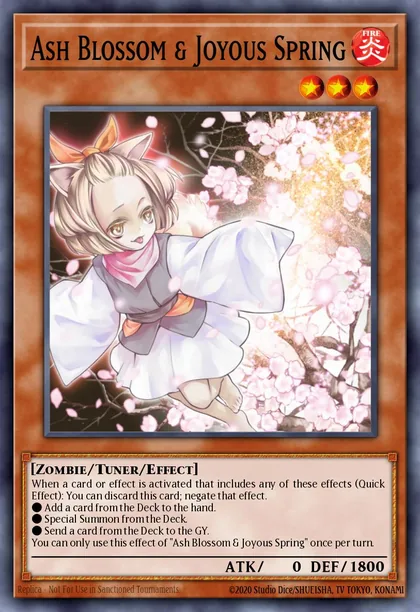 Ash Blossom & Joyous SpringRA01-EN008 · seven rarities, one code
Yu-Gi-Oh! rarity chart: name, art and tell-tale signs
Go down the table and stop at the first row that matches your card. It runs roughly from plain to flashy. That is a visual order, not a price order.
| Rarity | Card name | Artwork and the rest of the card |
|---|---|---|
| Common | Black, no foil (white on Xyz, Link, Spell and Trap cards) | Flat print. The hologram is the only foil on the card. |
| Short Print | Same as Common | Identical to a Common, just harder to pull. Only a set list tells them apart. |
| Rare | Silver foil (more bronze-looking on newer cards) | Flat print |
| Super Rare | Plain, no foil | Holofoil art. Since mid-2017 the Level stars and Attribute are foil too. |
| Ultra Rare | Gold foil (some use red, blue, green or purple) | Holofoil art |
| Ultimate Rare | Gold foil | Raised, embossed foil on the art, borders, Attribute and Level stars. Since 2016 the TCG has mostly put them in OTS Tournament Packs. |
| Secret Rare | Rainbow foil | Sparkly holofoil art with a diagonal pattern on English cards |
| Prismatic Secret Rare | Rainbow, speckled in several colors | A grid of horizontal and vertical foil lines on the art |
| Starlight Rare | Rainbow foil | Bright rainbow foil in horizontal lines over the art, borders and almost the whole card, except the text box |
| Quarter Century Secret Rare | Speckled champagne-gold | Secret Rare foil over the whole card, plus a "25th Quarter Century" logo watermark in the middle of the text box. Printed in 2023–2025. |
| Platinum Secret Rare | Platinum (silver-white) shattered foil | Platinum-colored Secret Rare foil over the art and most of the frame. TCG only, in a handful of tins and collection sets. |
| Ghost Rare | Foil, but sources disagree on the color (see below) | Pale, washed-out 3D hologram. The monster is hard to make out until you tilt it. |
| Collector's Rare | Judge by the rest of the card | Rainbow reflective pattern on the art, Attribute, Level and borders, with a raised, engraved feel |
| Gold Rare | Gold foil | Gold holofoil art plus gold foil on the art frame, text border and card border |
| Premium Gold Rare | Raised gold | Ultra Rare-style art with thick gold frames and stars you can feel with a fingertip |
| Ultra Rare (Pharaoh's Rare) | Foil, varies by print | Ultra Rare holofoil with Egyptian hieroglyphs over it |
Two notes on the trickier rows:
- Ghost Rare names: Konami's beginner guide says rainbow, TCGplayer says silvery-white, and Yugipedia says silver on early prints and gold on later ones. Trust the ghostly 3D art, not the name.
- Starlight Rare borders: starting with Chaos Origins (July 2026), Konami swapped the Starlight Rare's grey outer border for a rainbow foil border. Older Starlights keep the grey border.
Secret, Starlight or Quarter Century? Telling the shiny ones apart
The top rarities all shine, so they get mixed up. Run these checks in order.
- Check the name color Rainbow: Secret, Prismatic Secret or Starlight. Speckled champagne-gold: Quarter Century Secret Rare. Platinum, silver-white shattered foil: Platinum Secret Rare.
- See how far the foil reaches Only on the art: Secret or Prismatic Secret Rare. Over the art, borders and most of the frame: Starlight, Quarter Century Secret or Platinum Secret Rare.
- Tilt the art under a light Diagonal sparkle lines mean a regular Secret Rare. A grid of horizontal and vertical lines means Prismatic Secret Rare; Starlight Rare carries that horizontal pattern across the whole card.
- Look inside the text box A "Yu-Gi-Oh! Card Game 25th Quarter Century" logo watermark in the middle settles it: Quarter Century Secret Rare.
- Match it to the set Starlight Rares debuted in core booster sets with Rising Rampage (2019). Quarter Century Secret Rares come from 2023–2025 products. Platinum Secret Rares exist only in a few TCG products, such as the 2014 and 2015 Mega-Tins, Quarter Century Bonanza and Rarity Collection 5.
In a November 2024 press release, Konami said Quarter Century Secret Rares were only available during the 25th anniversary period. It also said it has never reprinted a card in Quarter Century Secret Rare once that card already has a version in that rarity.
1st Edition, Unlimited or Limited Edition?
To tell if a Yu-Gi-Oh! card is 1st Edition, look for the printed words "1st Edition". On cards with the layout Konami introduced in 2014, they sit at the bottom of the card, right next to the 8-digit password in the bottom-left corner. On older cards they sit just under the left edge of the artwork. Then check the hologram: it should be gold.
| Edition | Printed text | Hologram | Where you find it |
|---|---|---|---|
| 1st Edition | "1st Edition" | Gold | The first print run of most retail sets |
| Unlimited | None | Silver | Later print runs of the same set |
| Limited Edition | "LIMITED EDITION" | Gold | Mostly promos: tin cards, Sneak Peek cards, magazine cards, plus a few sets such as the original Hidden Arsenal |
Edition is not rarity. A 1st Edition Common is still a Common. What the edition changes is value: on the secondary market, Unlimited prints are typically worth less than the 1st Edition print of the same rarity. Japanese and Chinese cards have no edition at all, and every one of them has a silver hologram.
The Eye of Anubis hologram: what it tells you
The small foil square in the bottom-right corner is the security foil, which collectors call the Eye of Anubis hologram. Konami describes it as rows of the "Millennium Eye" with the text YU-GI-OH!. Almost every official card since Magic Ruler (2000) has one.
What it tells you:
- The edition. Gold means 1st Edition or Limited Edition. Silver means Unlimited, or a Japanese or Chinese card.
- Whether the card is genuine. The foil is printed onto the card, not stuck on. It is too thin to feel with a fingertip, which is often not the case on fakes.
- Roughly how new the print is. Since Code of the Duelist (August 2017), tiny holographic stars appear among the eyes at certain angles. On newer cards, stars are normal, not a sign of a fake.
What it does not tell you: the rarity. A Common carries the same hologram as a Starlight Rare, and the color follows the edition.
Rare isn't the same as valuable: price the exact print
Search "Dark Magician" in Pullwise and you get a list of prints, not one price. On 2026-10-18 the app showed the 2002 tin print BPT-001 Secret Rare at $63.01 TCGplayer market. BPT-007, another early tin print and also a Secret Rare, was $19.08. The 2016 Mega-Tin CT13-EN003 Ultra Rare was $6.97, and the cheapest reprint was $0.36. All of them are the same card in the game, and two of them share a rarity.
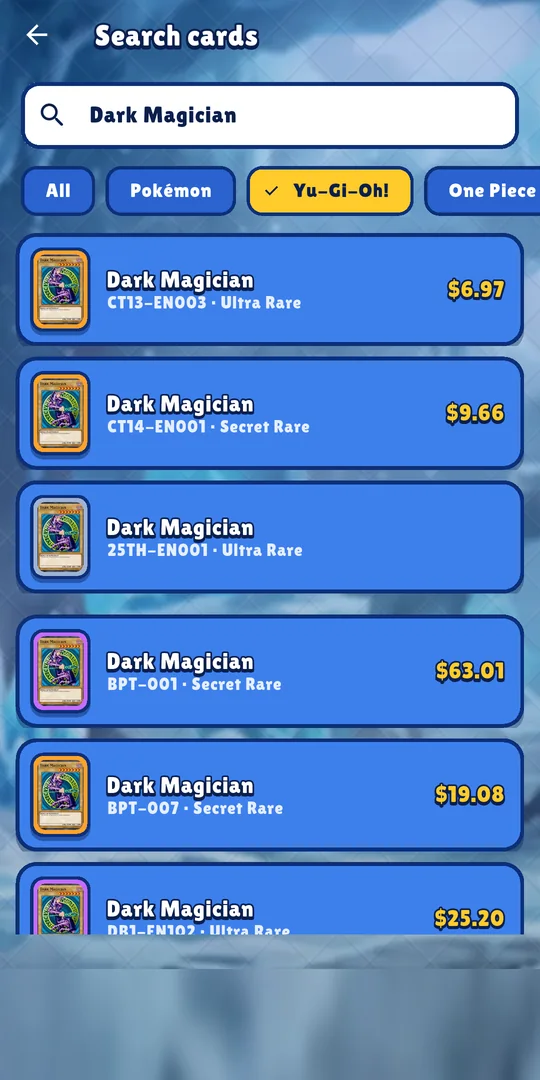
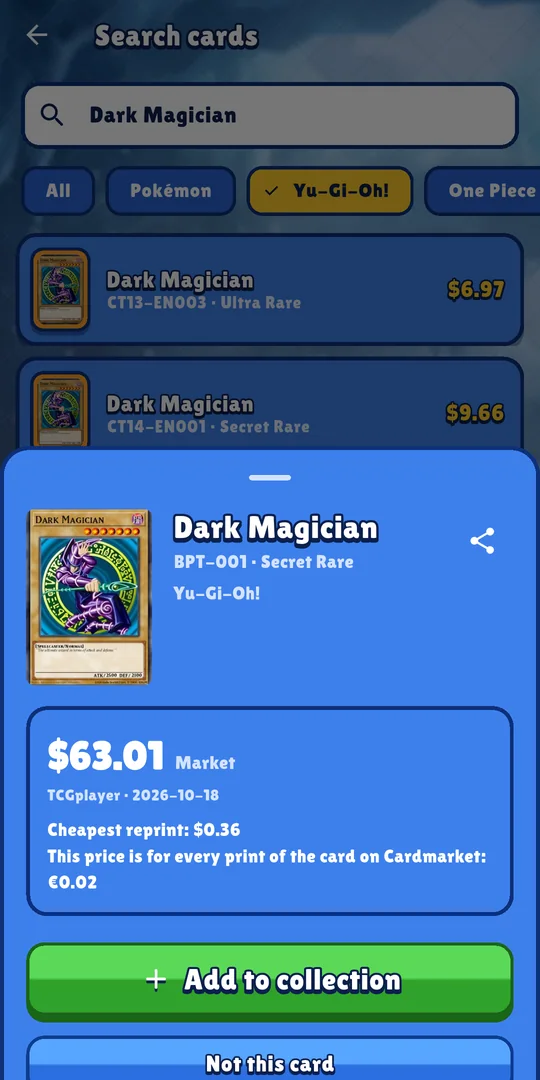
This is normal for popular cards. Yugipedia lists more than 60 English printings of Dark Magician, and Konami's database lists 77 printings of Blue-Eyes White Dragon. Codes get reused too: LOB-EN001 appeared on the 2004 worldwide English print and again on the 25th Anniversary Edition reprint. Note the Cardmarket line in the second screen as well: €0.02 "for every print of the card". A price that lumps all prints together says nothing about the copy you hold.
How to check what your Yu-Gi-Oh! card is worth
- Read the set code The full code under the art, including the region letters.
- Name the rarity Use the chart above. If the same code exists in two rarities, the foil decides.
- Note the edition 1st Edition, Unlimited or Limited Edition, from the text and the hologram.
- Look up that exact combination On TCGplayer, open the listing whose number and rarity match your card, not just the card name. Konami's card database shows which rarities exist for each code.
- Be honest about condition Creases, bent corners and scratched foil all lower what a buyer will pay.
Or scan the card with Pullwise. It reads the set code, finds the print, and shows the dated TCGplayer market and low prices plus the cheapest reprint, so you see at once whether you hold the expensive version. Matching uses the English code: for a German or French card, type it with EN in the free search (LOB-DE001 becomes LOB-EN001). Our guide to scanning cards for value works the same for Yu-Gi-Oh!, and our card scanner apps compared covers other tools.
Quick fake check
A rare-looking card is only worth something if it's real. Common giveaways, from Yugipedia's counterfeit page:
- Hologram: missing, dull, or it peels off like a sticker.
- Edition mismatch: "1st Edition" printed next to a silver hologram.
- Fake foil: a gold-looking name that doesn't reflect, Secret Rare-style diagonal lines printed onto flat art, or a spiral shine over the whole card.
- Text errors: misspellings (even "Konaini"), odd words like "Adversary" instead of "opponent", wrong fonts, or ATK/DEF on a Spell or Trap.
- Missing details: no password in the bottom-left corner (a few real cards, like Labyrinth Wall, have none) or no copyright line next to the hologram.
- Impossible cards: a single-card Exodia, or a language that was never released, such as Arabic.
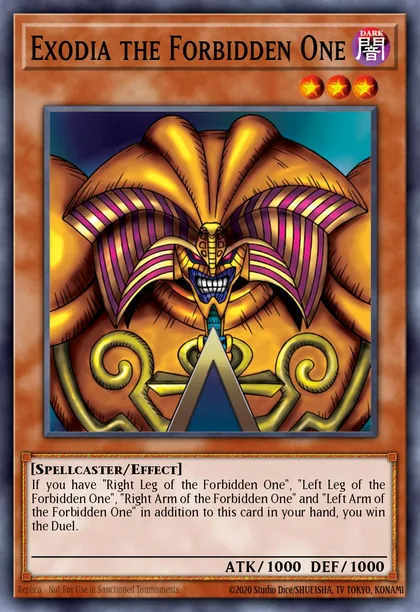 Exodia the Forbidden OneOne of five pieces
Pullwise matches the printing and shows its price. It doesn't grade cards or judge condition, so do these checks by eye before you buy or sell.
Collect other games too? Pokémon marks rarity with a printed symbol instead of foil. See our Pokémon card rarity symbols chart.
Sources
- Konami, Yu-Gi-Oh! TCG — New to Yu-Gi-Oh! (official look of each rarity, including Ghost Rare's rainbow name; password bottom left; gold security foil for 1st and Limited Edition, silver for Unlimited; "Millennium Eye")
- Konami, Yu-Gi-Oh! TCG — Chaos Origins (Starlight Rare grey border replaced by a rainbow foil border; July 2026 launch)
- Konami, Yu-Gi-Oh! Card Database — Blue-Eyes White Dragon (77 printings; RA05-EN085 and BLMM-EN001 each in two rarities; checked 2026-10-18)
- Konami press release via Bastion, November 2024 — Quarter Century Bonanza (Quarter Century Secret Rares anniversary-only, never reprinted in that rarity)
- TCGplayer Seller Blog — Understanding Yu-Gi-Oh! Rarities (Starlight lattice foil, Ghost Rare silvery-white name, very different prices per rarity)
- Yugipedia — Card Number (format, position, region codes, one number for several rarities)
- Yugipedia — Rarity, Common, Short Print, Rare, Super Rare, Ultra Rare, Ultimate Rare, Secret Rare (name and art foil per rarity, diagonal Secret Rare pattern, Ultimate Rares in tournament packs)
- Yugipedia — Starlight Rare, Prismatic Secret Rare, Quarter Century Secret Rare, Platinum Secret Rare (foil patterns, Starlight debut, Quarter Century name and watermark, Platinum Secret Rare products)
- Yugipedia — Ghost Rare, Collector's Rare, Gold Rare, Premium Gold Rare, Ultra Rare (Pharaoh's Rare) (Ghost Rare name silver then gold, the other special finishes)
- Yugipedia — Edition and 1st Edition (edition text and its two positions, hologram color per edition, no editions on Japanese and Chinese cards, Unlimited typically worth less)
- Yugipedia — Card layout and Series 9 (the 2014 layout that moved the edition text next to the password)
- Yugipedia — Security foil (Eye of Anubis Hologram) (introduced with Magic Ruler in 2000, printed on rather than stuck on, stars since Code of the Duelist in 2017)
- Yugipedia — Counterfeit (the fake-card checklist, including the single-card Exodia and its official exceptions)
- Yugipedia — Ash Blossom & Joyous Spring (RA01-EN008 printed in seven rarities in the 25th Anniversary Rarity Collection; also listed that way in YGOPRODeck's database)
- Yugipedia — Legend of Blue Eyes White Dragon and Dark Magician (LOB-001, LOB-E001 and LOB-EN001 print history; Dark Magician's more than 60 English printings, including BPT-001 (Booster Pack Collectors Tins 2002), BPT-007 (Collectible Tins 2003) and CT13-EN003 (2016 Mega-Tins))